A Serious Look At Atheism’s Most Persuasive Claims
As a matter of fact...
Why This Book Was Written
For decades, atheism has presented itself as the most intellectually rigorous position available: no God, no supernatural causes, no ultimate meaning—only matter, time, and chance. For many, this outlook feels modern, grounded, and evidence-based. Yet across the disciplines of physics, philosophy, history, biology, and psychology, unresolved questions continue to surface that resist easy dismissal.
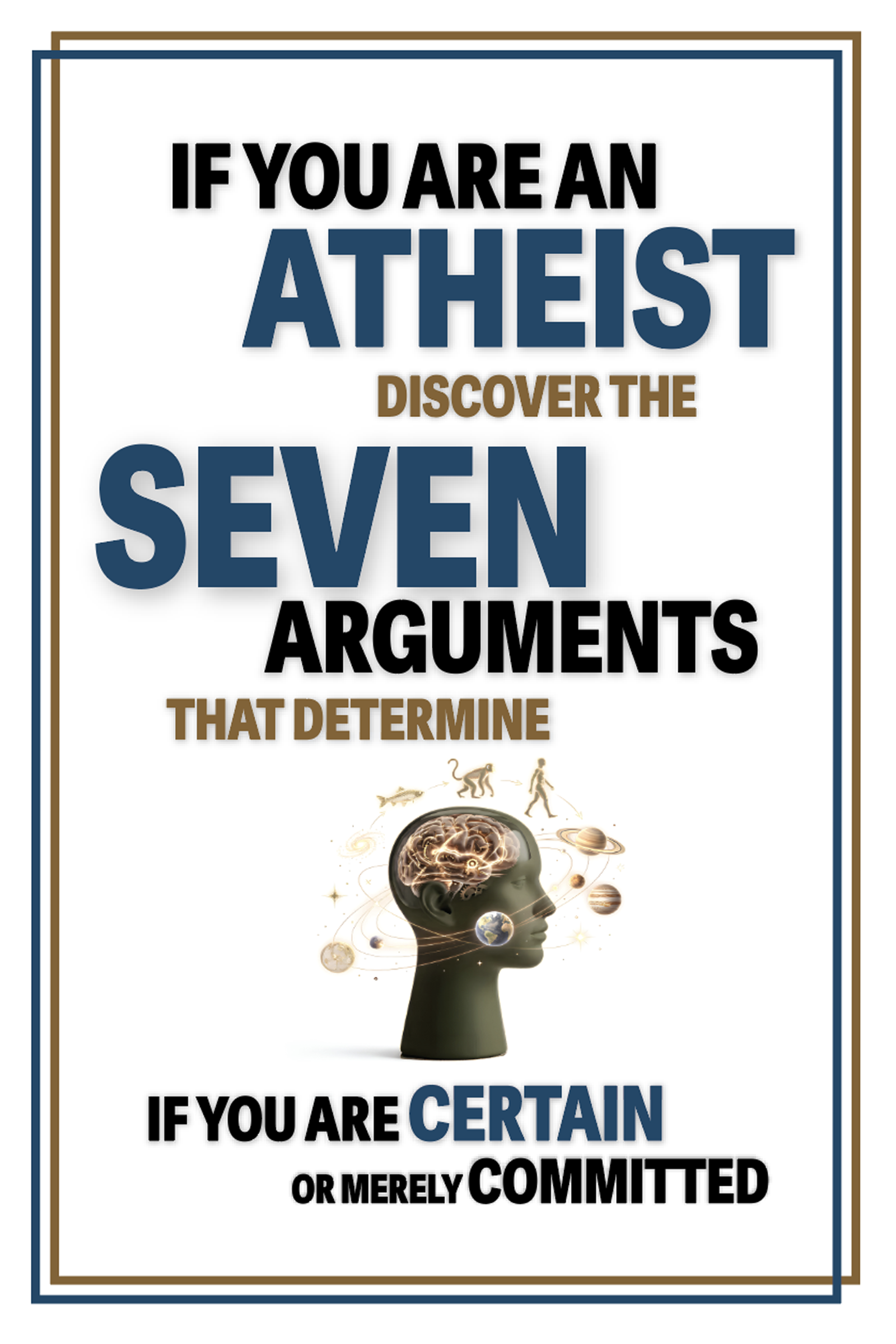
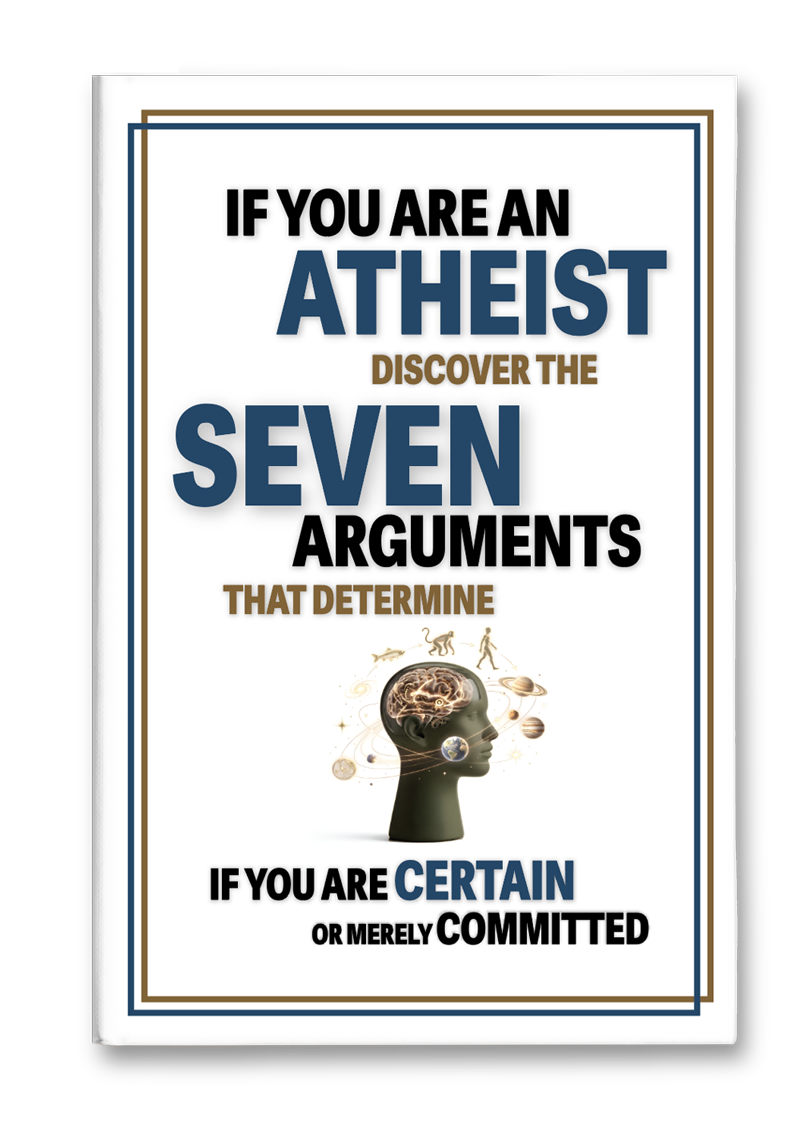
If You Are An Atheist, Included Are The Seven Arguments To Determine If You Are Certain or Merely Committed examines seven of the central claims most often used to support atheism and places them alongside the most substantial challenges raised against each of them. It explores whether morality can truly be reduced to culture and evolution, whether the origin of the universe can be explained by “nothing,” whether the laws of physics are merely accidental, whether human reason can be trusted if it is only chemistry, whether the resurrection of Jesus can be dismissed on historical grounds, whether meaning, love, beauty, and longing are only biological illusions, and whether atheism itself remains internally coherent when taken seriously.
This is not a book of emotional appeals, blind faith, or ideological pressure. It is not anti-science, anti-philosophy, or anti-skepticism. It is a careful, structured exploration of some of the most persistent questions surrounding belief and unbelief—using the same standards of reasoning applied in every other serious field of inquiry. It does not tell the reader what to conclude. It simply refuses to let the questions be ignored.
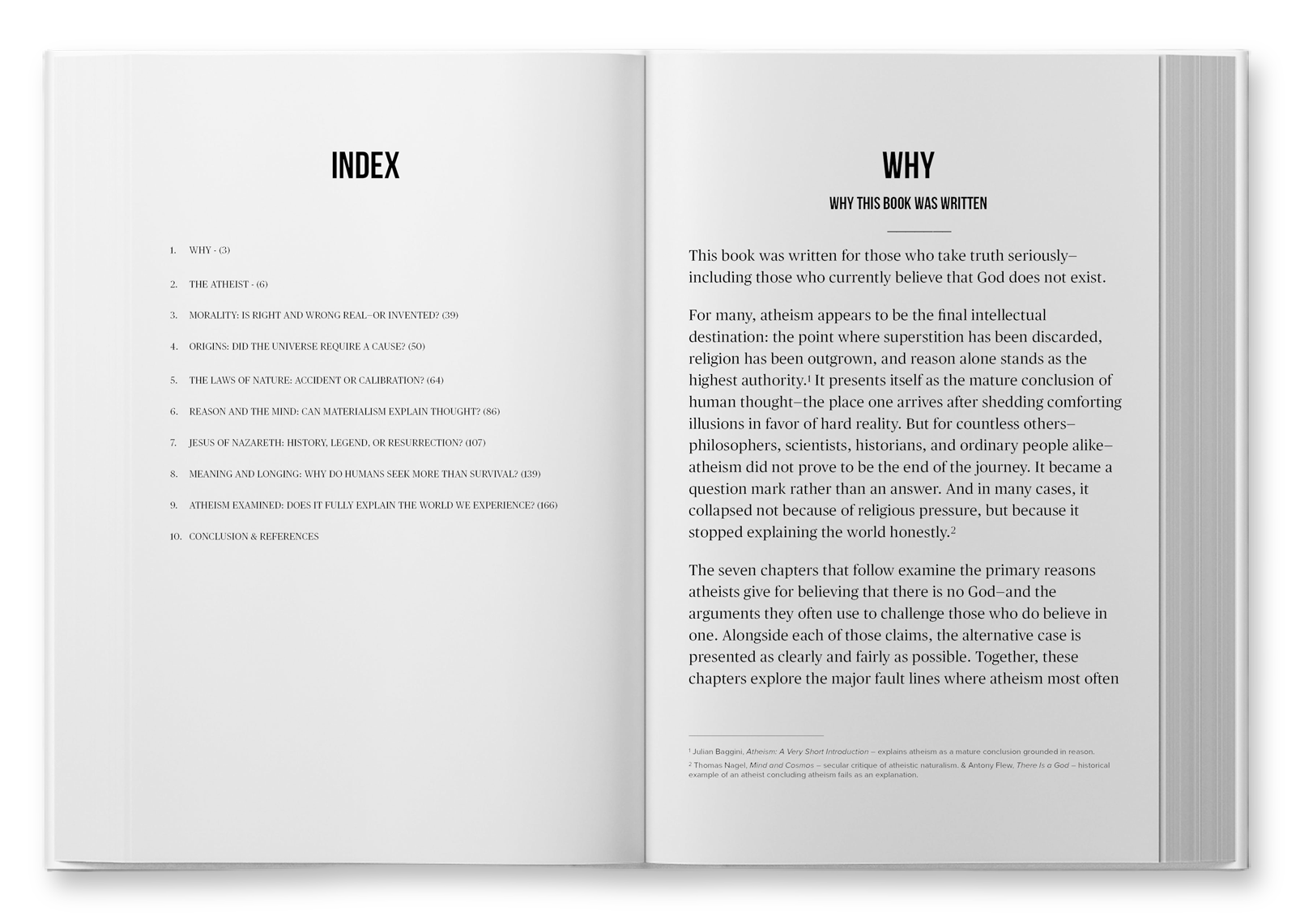
Index
2. The Atheist – (6)
3. Morality: Is Right and Wrong Real—or Invented? (39)
4. Origins: Did the Universe Require a Cause? (50)
5. The Laws of Nature: Accident or Calibration? (64)
6. Reason and the Mind: Can Materialism Explain Thought? (86)
7. Jesus of Nazareth: History, Legend, or Resurrection? (107)
8. Meaning and Longing: Why Do Humans Seek More Than Survival? (139)
9. Atheism Examined: Does It Fully Explain the World We Experience? (166)
10. Conclusion & References
212 Pages In Length
Purchase a Copy Today
212 Pages In Length – Approximately 4 Hrs 12 Minute Read Plus References
Paperback
Digital
5 Book Collection
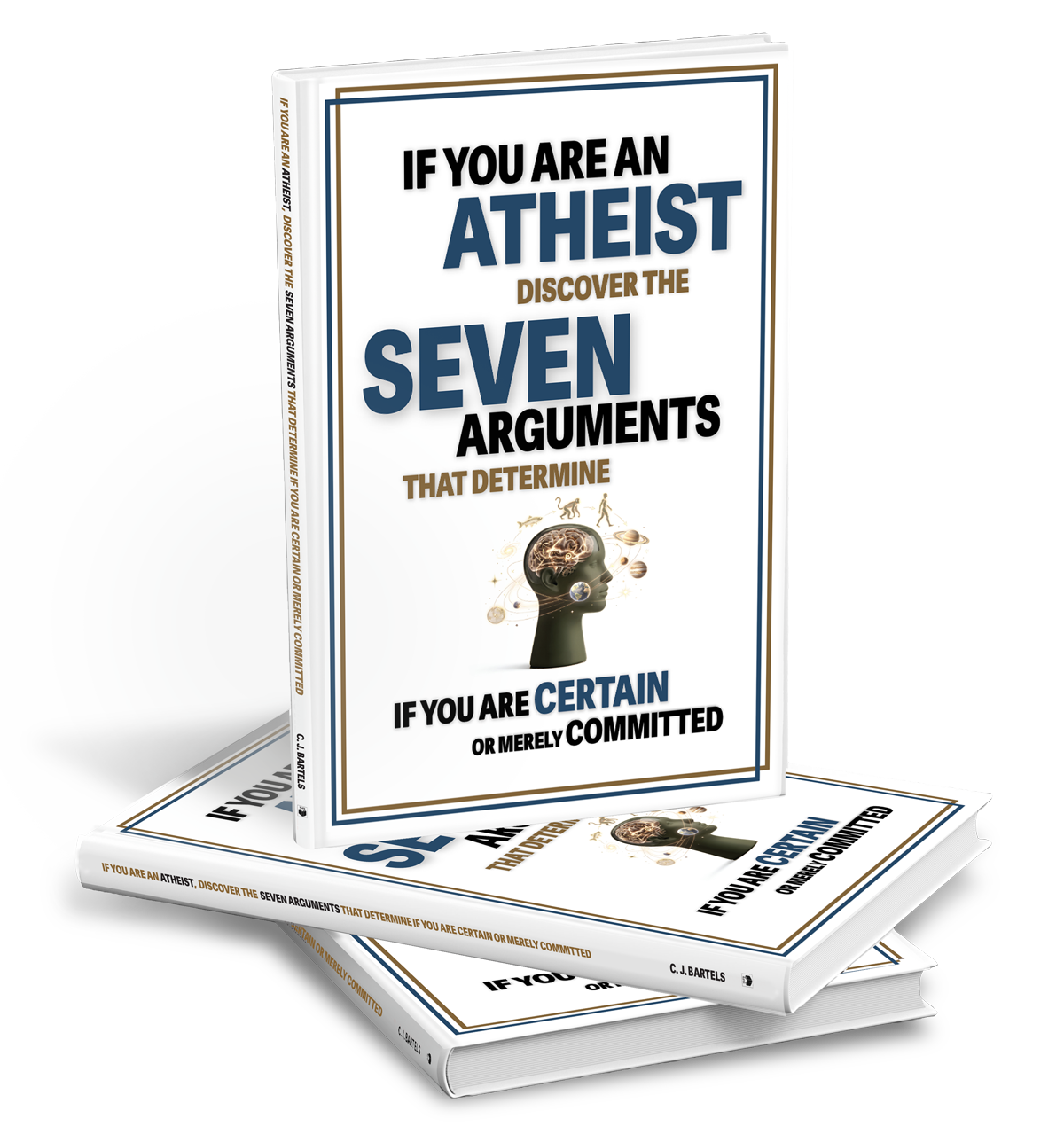
Bulk Discount For Stores, Government, & Military
Let us know your intent and we will provide all information needed.
Sample - Chapter 1
Why
Index
2. The God Who Draws Near Without Shrinking- (12)
3. Love Without Fear, Fear Without Love – (16)
4. When Worship Became Familiar – (20)
5. Catholicism: The God Above Us – (24)
6. Evangelicalism: The God Beside Us – (28)
7. Orthodoxy: The God Who Remains Unchanged – (32)
8. When Culture Was Allowed to Correct God – (36)
9. The Cost of Recovering the Fear of God – (40)
10. The God Who Will Not Be Reimagined – (44)
11. A Faith Worth Keeping – (48)
212 Pages In Length
_______
This book was written for those who take truth seriously—including those who currently believe that God does not exist.
For many, atheism appears to be the final intellectual destination: the point where superstition has been discarded, religion has been outgrown, and reason alone stands as the highest authority. It presents itself as the mature conclusion of human thought—the place one arrives after shedding comforting illusions in favor of hard reality. But for countless others—philosophers, scientists, historians, and ordinary people alike—atheism did not prove to be the end of the journey. It became a question mark rather than an answer. And in many cases, it collapsed not because of religious pressure, but because it stopped explaining the world honestly.
The seven chapters that follow examine the primary reasons atheists give for believing that there is no God—and the arguments they often use to challenge those who do believe in one. Alongside each of those claims, the alternative case is presented as clearly and fairly as possible. Together, these chapters explore the major fault lines where atheism most often breaks—not emotionally, not culturally, but intellectually and existentially:
- The reality of objective morality
- The origin of the universe
- The fine-tuning of physical law
- The existence of reason itself
- The historical case for Jesus and the resurrection
- The human hunger for meaning, love, and eternity
- The internal coherence of atheism’s own claims
These arguments are not arranged to overwhelm, but to reflect the way many people have actually moved in their search for truth. Rarely does one insight settle everything. More often, it is a slow accumulation of tension, a growing awareness that some explanations illuminate while others obscure, and that certain questions simply refuse to go away.
This book does not assume that Christianity is true at the outset. It begins where many skeptics actually start: with the universe itself, with thought and conscience, with justice and suffering, with beauty and love, with life and death—the unavoidable features of human existence that demand interpretation regardless of one’s beliefs.
You may finish this book convinced that God exists. You may still be uncertain. But if you read it honestly, you are unlikely to finish unchanged. Because the question this book ultimately presses is not whether belief is easy or comforting, it is whether unbelief is still coherent.
NOTE: Footnotes included in book. See book for references.

Matter Of Fact Books
Publishing What Matters Most
What's Behind Matter Of Fact Books
Matter of Fact Books is made up of people much like you—ordinary individuals who work hard to put food on the table and who spent years fumbling through Scripture before its truth finally took root. As for why this book exists, it’s because, over time, we have grown weary of watching good, well-meaning people who call themselves Christians defend beliefs that stand in opposition to God’s Word. Our hope is simple: by presenting facts rather than opinions, readers can see both sides more clearly, choose their position thoughtfully, and help diminish some of the hypocrisy we see in the world today, no matter which side you choose.
Single Book Editions – Coming in 2026
Click image to find out more.