
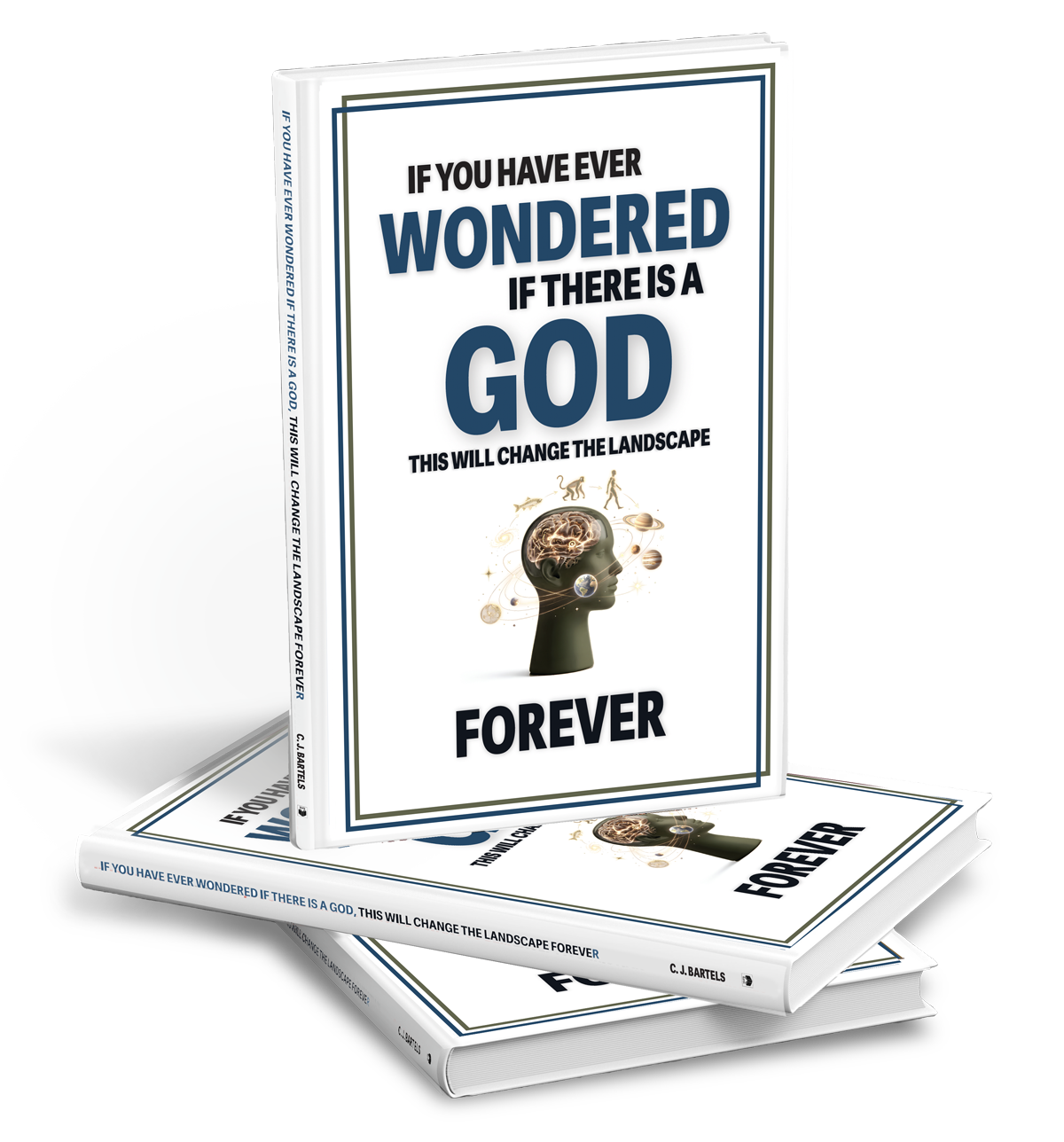
The Answer To The Most Important Question You May Have Stopped Asking.
As a matter of fact...
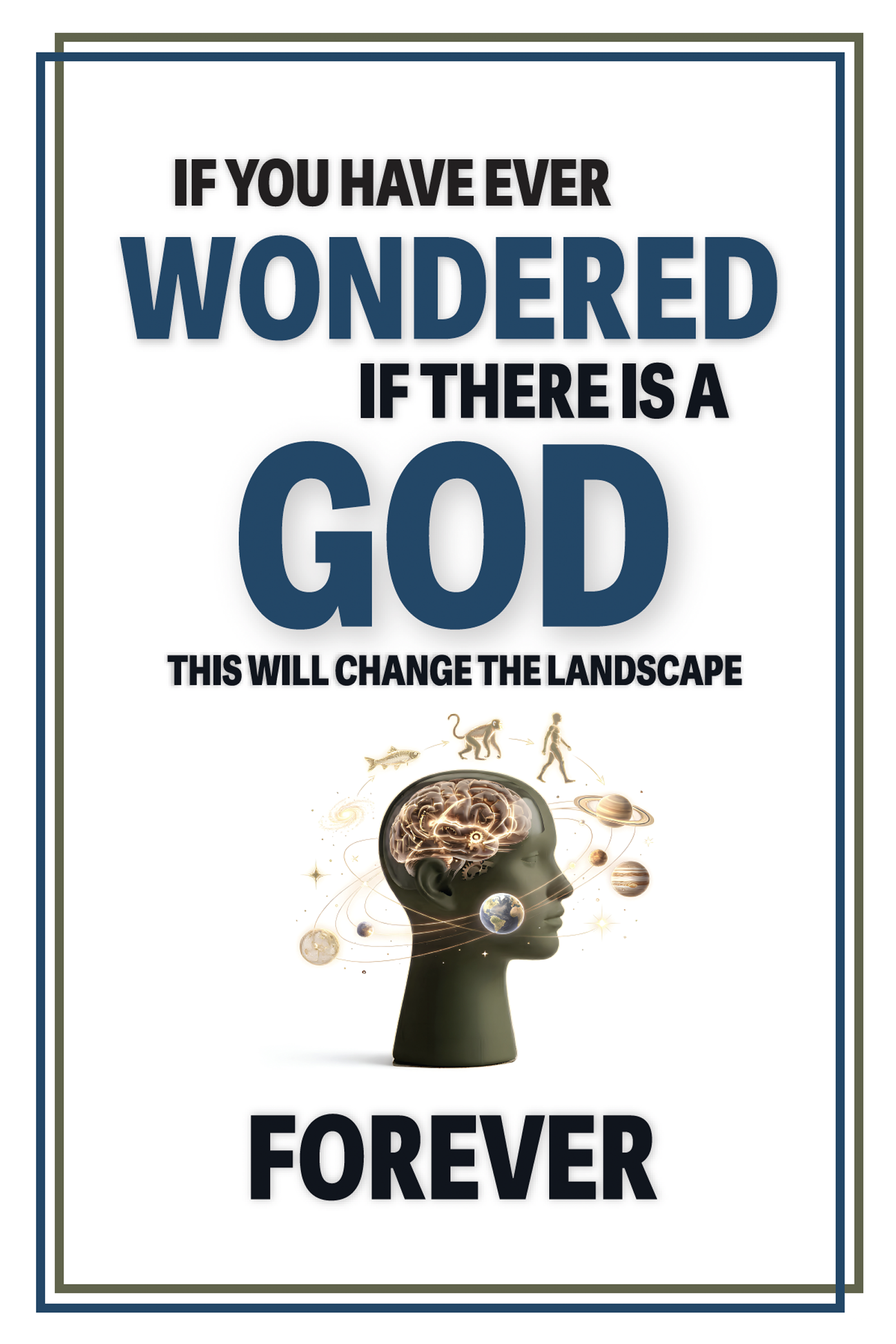
What If The Question of God Was Never Disproved—Only Avoided?
This book is written for those who take truth seriously, including skeptics, atheists, agnostics, rationalists, empiricists, materialists, secularists, and believers who are no longer satisfied with inherited answers. It does not begin by quoting Scripture or demanding faith. It begins with the unavoidable features of human experience: our instinctive sense of right and wrong, the origin and order of the universe, the existence of reason and consciousness, the hunger for meaning, and the stubborn historical question of Jesus of Nazareth.
Rather than caricaturing unbelief, the strongest arguments against God are presented fairly and examined honestly. Each is then placed beside the realities it must explain. The result is not emotional persuasion, but growing intellectual pressure—an accumulation of evidence that forces a reevaluation of assumptions many have never questioned.
This is not a book that promises comfort. It promises clarity. It does not ask whether belief feels helpful, traditional, or inspiring. It asks whether unbelief can truly account for the world as it is—without borrowing concepts it cannot justify.
You may arrive convinced that God does not exist. You may finish persuaded that He does. Or you may find yourself standing in a place you did not expect—no longer certain that disbelief is the most rational position. But if you read honestly, one thing is almost certain, the landscape will not look the same when you are done.
Index
EPISTEMOLOGY – (4)
Part 1:
IF YOU DO NOT BELIEVE IN GOD, DISCOVER THE ARGUMENTS THAT HAVE CHANGED EVERYTHING
- Why – (7)
- The Atheist – (10)
- Morality – (43)
- Origins – (54)
- The Laws of Nature – (68)
- Reason and the Mind – (90)
- Jesus of Nazareth – (105)
- Meaning and Longing – (137)
- Does Atheism Fully Explain the World We Experience? – (164)
Part 2:
IDENTIFYING GOD IN A WORLD WITH MANY GODS
- HAS GOD MADE HIMSELF KNOWN TO THE WORLD? – (177)
- THE PROPHET-CENTERED STRUCTURE – (182)
- THE FOUNDING REVELATION – Step one – (188)
- PROPHETIC AUTHORITY – step two – (194)
- THE PRIMARY SCRIPTURE – Step three – (200)
- THE SECONDARY TRADITION – Step Four – (207)
- THE LEGAL / NORMATIVE SYSTEM – Step five – (214)
- INSTITUTIONAL AUTHORITY – Step Six – (219)
- NON-PROPHET REVELATIONS – (232)
- RELIGION AS IDENTITY – (266)
Part 3:
A DIFFERENT KIND OF RELIGION
- DOES CHRISTIANITY PASS THE TRUTH TEST – (287)
Part 4:
WHAT WILL YOU DO WITH THE INFORMATION?
- THE MOST HONEST QUESTION – (361)
References – (366)
Purchase a Copy Today
380 Pages In Length
Barnes & Noble
Amazon
All MoFB
Bulk Discount For Stores, Government, & Military
Let us know your intent and we will provide all information needed.
Part 2: Introduction
Has God Made Himself Known To The World?
Index
EPISTEMOLOGY – (4)
Part 1:
IF YOU DO NOT BELIEVE IN GOD, DISCOVER THE ARGUMENTS THAT HAVE CHANGED EVERYTHING
- Why – (7)
- The Atheist – (10)
- Morality – (43)
- Origins – (54)
- The Laws of Nature – (68)
- Reason and the Mind – (90)
- Jesus of Nazareth – (105)
- Meaning and Longing – (137)
- Does Atheism Fully Explain the World We Experience? – (164)
Part 2:
IDENTIFYING GOD IN A WORLD WITH MANY GODS
- HAS GOD MADE HIMSELF KNOWN TO THE WORLD? – (177)
- THE PROPHET-CENTERED STRUCTURE – (182)
- THE FOUNDING REVELATION – Step one – (188)
- PROPHETIC AUTHORITY – step two – (194)
- THE PRIMARY SCRIPTURE – Step three – (200)
- THE SECONDARY TRADITION – Step Four – (207)
- THE LEGAL / NORMATIVE SYSTEM – Step five – (214)
- INSTITUTIONAL AUTHORITY – Step Six – (219)
- NON-PROPHET REVELATIONS – (232)
- RELIGION AS IDENTITY – (266)
Part 3:
A DIFFERENT KIND OF RELIGION
- DOES CHRISTIANITY PASS THE TRUTH TEST – (287)
Part 4:
WHAT WILL YOU DO WITH THE INFORMATION?
- THE MOST HONEST QUESTION – (361)
References – (366)
__________
Part One asked the most basic question a human being can ask: Does God exist at all? But if the answer is yes—even as a possibility—then the mind is immediately pressed into the next question, because belief in God cannot remain abstract for long. A God who exists is not merely a theory to be held; He is a reality to be reckoned with. And once God is acknowledged as real, the human conscience and intellect instinctively begin to ask what must follow: What is He like? What does He demand? What does He forbid? What does He love? And where do we stand in relation to Him?
That is why the question of God’s existence naturally becomes a question of God’s communication. The issue is not simply whether there is a Creator, but whether that Creator has made Himself known in any meaningful way. For the human soul does not merely crave explanation—it craves orientation. If God exists, then life has meaning beyond appetite and survival, morality becomes more than preference, and accountability becomes more than social consequence. A silent God would leave the world suspended in uncertainty, with human beings forced to build ultimate answers from nothing but instinct, imagination, and fear.
And so, as soon as people begin to take God seriously, they recognize that only two possibilities remain. Either God is silent—distant, unknowable, withdrawn from His creation—or God speaks, revealing His will, disclosing His character, and calling human beings to respond. The first possibility may be asserted, but it cannot long satisfy. A God who creates yet never speaks can feel indistinguishable from no God at all. A God who governs yet never reveals His will cannot be trusted, worshiped, or obeyed with any confidence. Therefore the question sharpens: if God is real and not silent, how would such a God make Himself known?
Ways In Which We Believe God Speaks
Across cultures and throughout history, many human beings have instinctively expected that if God speaks, He will do so through a person. We are embodied, relational creatures. We learn through voices, stories, teachers, and examples. Even in ordinary life, the most important things we know were not discovered alone; they were handed to us through the witness and instruction of others. It does not surprise us, then, to imagine that God might work in a similar way—addressing humanity through individuals chosen to carry His message.
There are deep reasons for this expectation. Human life is filled with uncertainty. We face suffering we cannot control, guilt we cannot erase, and death we cannot avoid. We sense that moral choices matter, yet we do not always trust our own judgment. We long for forgiveness and direction, but we are not sure where to find them. In that uncertainty, the idea of a prophet—someone who claims to know what God wants and what God has promised—carries enormous emotional and moral weight. A prophet seems to offer what the human heart craves most: clarity.
We also live with the awareness of our limits. If God is infinite and holy, and we are finite and flawed, it is not difficult to believe we might need help to understand Him. Standing alone before ultimate reality can feel overwhelming. A prophet appears to bridge the distance—human enough to understand our weakness, yet close enough to God to speak with authority about His will. It feels natural to hope that such a person exists.
And even those who do not consciously look for a prophet still look for something like one. They seek teachers, spiritual leaders, thinkers, and moral authorities. They listen for voices that seem wiser, more grounded, or more connected to truth than their own. Human beings rarely remain content with silence on ultimate questions; they search for someone who can tell them what their lives mean. The figure of the prophet grows out of that search.
Yet the world’s religions do not all build themselves around prophecy in the same way. Across history, belief has tended to form along several recognizable structures. Some systems are built around a single founding messenger and the authority of his revelation—what we will call (for our purposes here) prophet-centered religion. Others are built not around prophecy at all, but around cosmic order and moral cause-and-effect: dharma, karma, liberation, and cycles of rebirth, as seen in Hinduism, Buddhism, Jainism, and Sikhism. Still others are rooted in identity and peoplehood, interwoven with culture, land, and ancestry; or organized as philosophical “ways” of life aimed at wisdom, harmony, and virtue; or lived in spirit-centered and animistic forms focused on ritual, protection, and the unseen powers believed to surround everyday life. Even modern secular systems sometimes assume a religious shape, functioning as political religions—complete with sacred causes, moral absolutes, heresies, and promised futures.
Recognizing this diversity clarifies our task. We are not merely comparing doctrines. We are tracing patterns—how human beings organize ultimate authority, how they answer the question of what must be obeyed, and where truth is believed to reside. And it prepares us to ask the next question: if human beings so often look for prophets, what happens when someone actually claims to be one? What develops around such a claim? How does that claim grow into an entire religious world that includes scripture, community, law, devotion, and authority?
Those questions lead us to where we now turn—from expectation to structure, from why people look for prophets to what happens when an entire faith is organized around one. We will begin with the prophet-centered model, tracing its most common development in six stages.

Matter Of Fact Books
Publishing What Matters Most
What's Behind Matter Of Fact Books
Matter of Fact Books is not the work of one person. It is inspired by God and shaped through Scripture, conviction, and years of deep conversation—often around a table with an amazing group of friends, a glass of scotch, and a refusal to accept shallow answers. We’re not here to shout opinions. We’re here to present facts, side-by-side truth, and clear reasoning—so readers can examine what they believe, why they believe it, and whether it aligns with what they claim to profess.
Matter Of Fact Books
Click image to find out more.


Matter Of Fact Books
Our books are priced to sell and change lives.