
What the Bible Says About Passing Judgement
As a matter of fact...
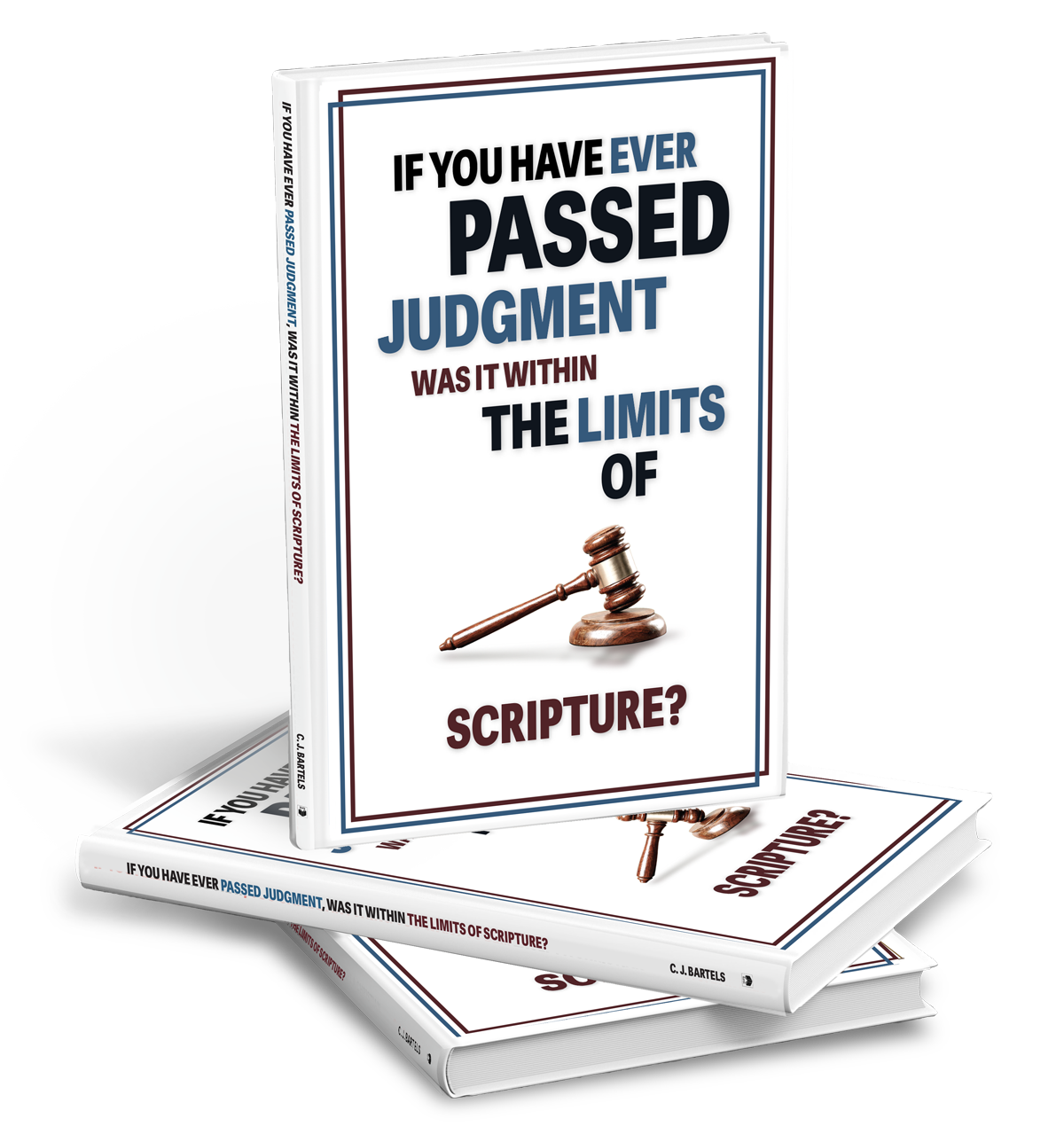
We hear it everywhere: “Don’t judge.” It is quoted as if it were the whole of Christianity in a single sentence. Yet Scripture speaks far more deeply—and far more carefully—about judgment than our slogans ever do. The Bible warns against a kind of judgment that tries to sit in God’s seat, and it also commands a kind of judgment without which love, truth, and even sanity collapse. Every day you and I make judgments about people, ideas, sins, motives, and eternal things—often without realizing how easily we cross the line from discernment into condemnation. This book asks a simple but searching question: When you have passed judgment, was it within Scripture’s limits? The answer matters, not only because it shapes the way we treat others, but because it reveals whether we truly understand grace, humility, and the heart of God Himself.
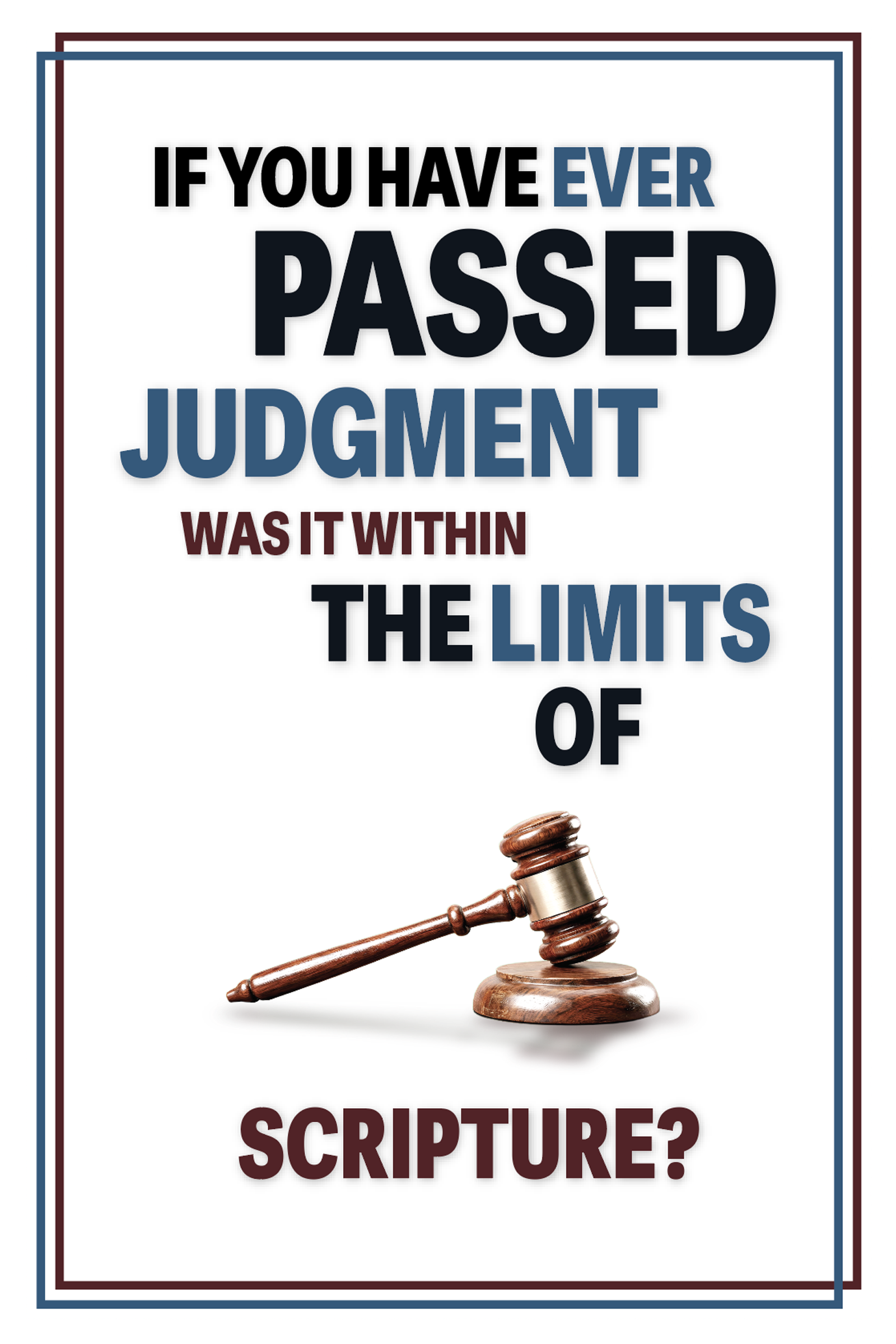
Why This Book Was Written
Along the way, you’ll see why Jesus could speak with piercing moral clarity and still be called the Friend of Sinners; why crowds love to condemn; why labels and symbols make us sentence people before we know them; and why Scripture calls believers to be hardest on themselves and most patient with the world around them.
This is not a book about “those judgmental people.” It is a mirror. The author confesses that every chapter landed on his own heart first—and then shows the astonishing grace of God that meets us right there. You will come away humbled, steadied, and freed to practice a kind of judgment that looks less like a gavel and more like Jesus.
If you have ever judged someone—and you have—this book will help you discover whether it was within Scripture’s limits…and how grace can reshape the way you see everyone, including yourself.
Index
2. Judging vs. Passing Judgment: The Difference We Keep Missing
3. The Speck and the Log: Why Hypocrisy Ruins Judgment
4. Testing Everything: Why Christians Must Still Discern
5. When Questions Feel Like Attacks
6. Labels, Flags, and Yard Signs: When Symbols Become Sentences
7. Crowd Judgment: When Outrage Becomes Entertainment
8. Judging Inside vs Outside the Church
9. Restoring, Not Crushing: How Truth and Mercy Work Together
10. Judging Ourselves: Conviction Without Self-Condemnation
11. The Final Judgment: Why God’s Judgment Is Good News
12. Jesus the Judge and Friend of Sinners
Conclusion — Learning to See as God Sees
86 Pages In Length
Purchase a Copy Today
86 Pages In Length – Approximately 2 Hrs 24 Minute Read Plus Notes
Barnes & Noble
Special Edition Hardcover
Amazon
All MoFB
Bulk Discount For Stores, Government, & Military
Let us know your intent and we will provide all information needed.
Sample - Chapter 2
Judging vs. Passing Judgment
Index
2. Judging vs. Passing Judgment: The Difference We Keep Missing
3. The Speck and the Log: Why Hypocrisy Ruins Judgment
4. Testing Everything: Why Christians Must Still Discern
5. When Questions Feel Like Attacks
6. Labels, Flags, and Yard Signs: When Symbols Become Sentences
7. Crowd Judgment: When Outrage Becomes Entertainment
8. Judging Inside vs Outside the Church
9. Restoring, Not Crushing: How Truth and Mercy Work Together
10. Judging Ourselves: Conviction Without Self-Condemnation
11. The Final Judgment: Why God’s Judgment Is Good News
12. Jesus the Judge and Friend of Sinners
Conclusion — Learning to See as God Sees
__ Pages In Length
The Difference We Keep Missing
__________
If the confusion surrounding “judge not” begins with language, it grows because two very different actions travel under the same word. We use the single term “judging” to describe both the healthy act of discernment and the damaging habit of condemnation, and then we are surprised when conversations collapse. Until this difference is made clear, honest moral thought is nearly impossible. People who are trying to talk about discernment get accused of condemning. People who are actually condemning others claim they are merely “being discerning.” The same word is asked to do too much work, and it does it badly.
The first meaning of judgment is the ordinary, unavoidable work of discernment. You do it every day without thinking about it. You decide which voices are trustworthy and which are not. You evaluate whether a behavior is wise or destructive. You weigh ideas, teachings, promises, leaders, and friends. A life without that kind of judgment is not virtuous; it is naïve. A society that refuses to call anything good or evil eventually loses the ability to protect the innocent from the predatory and the foolish from celebrated foolishness.
Scripture recognizes and commands this kind of judgment. Believers are told to “test the spirits” rather than believe every claim of spiritual authority (1 John 4:1). The Bereans are called noble because they examined the Scriptures daily to see whether what they were being taught was true (Acts 17:11). Jesus warns His followers that false prophets will come and says, “you will recognize them by their fruits” (Matthew 7:15–16). That recognition requires judgment, not in the sense of condemning souls, but in distinguishing truth from lies and reality from appearances. Paul tells Christians to cling to what is good and abhor what is evil (Romans 12:9), something impossible unless one first discerns the difference.
Jesus Himself practiced and modeled this form of judgment continually. He called hypocrisy what it was in the religious leaders of His day, not because He enjoyed humiliating them, but because hypocrisy poisons both the hypocrite and those influenced by them. His words in Matthew 23 are blunt and surgical, exposing spiritual showmanship and love of status (Matthew 23:1–36). He identified greed, lust, pride, and spiritual blindness, not as abstract philosophical categories, but as realities visible in actual lives. When He cleared the temple (John 2:13–17; Matthew 21:12–13), He was not being “judgmental” in the shallow modern sense; He was exercising moral discernment, seeing exploitation masquerading as religion and naming it accurately.
We see His discernment joined to compassion in His encounter with the rich young ruler. Mark tells us Jesus loved him even as He told him the uncomfortable truth about the hold wealth had on his heart (Mark 10:17–22). Truth-telling and love are not enemies in Jesus; they exist together. If judgment in this sense—naming reality, identifying sin, exposing deception—were sinful in itself, then Christ would be guilty of the very thing He forbids. The fact that He speaks so clearly is evidence that discernment is not merely permissible but necessary for anyone who cares about truth and human flourishing.
But there is another meaning of judgment, darker and more seductive. It is not content to say, “This action is wrong” or “This belief is false.” It moves one step further and declares, “I know who you are because of it.” It crosses from evaluating behavior to issuing verdicts about a person’s heart, destiny, and worth. Instead of saying, “That choice is destructive,” it says, “You are worthless.” Instead of saying, “That belief is misguided,” it says, “You are evil.” The person disappears behind the label. We move from moral clarity to moral sentencing.
Scripture explicitly warns us back from that precipice. Paul cautions believers not to “pronounce judgment before the time”, because when the Lord comes He will “bring to light the things now hidden in darkness and… disclose the purposes of the heart” (1 Corinthians 4:5). That work belongs to God because only God sees the heart (1 Samuel 16:7). We do not see nearly as much as we assume we do. Our knowledge is partial. God’s is perfect. He judges perfectly because He knows perfectly. We judge badly when we pretend to know what only God can know.
The difference between these two forms of judgment becomes vivid in the Gospels when Jesus meets two types of people. On the one hand, He confronts those confident in their own moral rectitude and religious standing. The Pharisee in His parable thanks God that he is not like other sinners, certain of his goodness and blind to his need (Luke 18:9–14). The religious leaders in Matthew 23 observe all the external forms of righteousness while ignoring justice, mercy, and faithfulness. Jesus exposes their hypocrisy not out of cruelty, but because unrepentant self-righteousness destroys the soul from the inside.
On the other hand, Jesus speaks with striking tenderness to people whose failures were publicly known and socially condemned. He receives the sinful woman who weeps at His feet and forgives her sins, while saying that those who think they have little to be forgiven love little (Luke 7:36–50). He defends the woman caught in adultery from execution and then tells her, “Neither do I condemn you; go, and from now on sin no more” (John 8:1–11). He calls Zacchaeus the tax collector down from the tree and brings salvation to his house (Luke 19:1–10). In each case, the difference is not the seriousness of the sin but the posture of the heart. Those who knew they needed grace received it. Those who were certain they did not need it found themselves further from God than they imagined.
All of this brings us to an uncomfortable and necessary honesty. It is easy to say, “Yes, other people judge like this.” It is harder to admit how often we do. Have we ever quietly written someone off? Have we ever taken pleasure in someone else’s failure because it made us feel superior? Have we ever assumed we knew someone’s heart because we saw one vote, one sentence, one mistake, or one label? Those are not the marks of discernment; they are the fingerprints of condemnation.
None of this means that right and wrong become blurry or that truth becomes negotiable. It means that there is a line we must learn to see. Discernment asks, “What is true? What is good? What leads to life?” Condemnation asks, “How can I stand above this person?” In true discernment we stand with God against what destroys people; in condemnation we stand against people in the secret hope that God agrees with our dislikes. One protects truth while loving people. The other uses truth as a weapon to protect pride.
The purpose of this chapter is not to make you afraid of forming moral conclusions; you will form them no matter what. It is to make you aware of what is happening inside you when you do. When you evaluate actions and ideas because you care about truth and human well-being, you are doing something Scripture commends. When you quietly imagine yourself sitting in God’s seat, issuing verdicts about hearts and destinies, you have crossed into territory that does not belong to you. The difference between those two is not a nuance. One is the daily work of wisdom. The other is a subtle attempt to be God.
In the chapters ahead, we will explore why hypocrisy so easily corrupts our judgment, why symbols and political identities tempt us to condemn before we understand, and how Jesus holds together clarity and compassion without compromise. For now it is enough to say that the word “judgment” names two very different realities. One is commanded. One is forbidden. One requires humility. The other thrives on pride. One reflects the character of Christ. The other reveals just how badly we need Him.

Matter Of Fact Books
Publishing What Matters Most
What's Behind Matter Of Fact Books
Matter of Fact Books is not the work of one person. It is inspired by God and shaped through Scripture, conviction, and years of deep conversation—often around a table with an amazing group of friends, a glass of scotch, and a refusal to accept shallow answers. We’re not here to shout opinions. We’re here to present facts, side-by-side truth, and clear reasoning—so readers can examine what they believe, why they believe it, and whether it aligns with what they claim to profess.
Matter Of Fact Books
Click image to find out more.


Matter Of Fact Books
Our books are priced to sell and change lives.