
Possibly, The Second Most Important Book You'll Ever Read
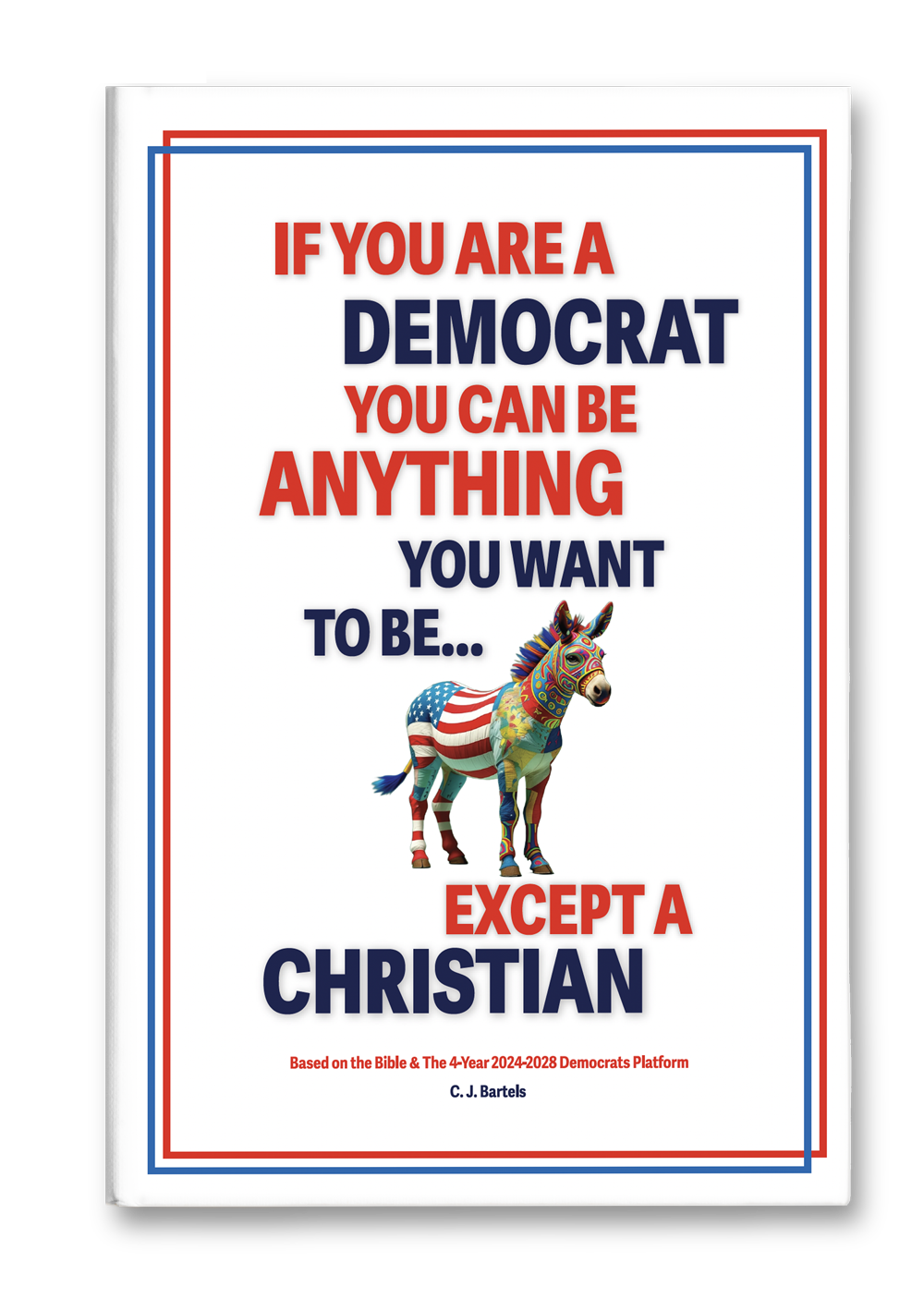
I want to clarify something in response to feedback I’ve received from Christians and non-Christians who found this book’s title uncomfortable without reading it. There is no reason to feel provoked by what this book offers.
If you are a Democrat or support the values of the 2024–2028 party platform, the first part of the title—If You Are a Democrat, You Can Be Anything You Want to Be…—should actually be encouraging. The world is wide open with countless possibilities: careers, causes, identities, beliefs, multiple religions, and paths. This book removes exactly one option. It does not restrict your daily life, your ambitions, or your future. Every choice remains yours.
Some assume the book promotes or attacks a political figure. It does not. It addresses ideas and worldviews, not individuals or parties. It simply compares what a political platform states with what the Bible states.
Let’s be clear: this book is meant for those who consider themselves Christian but find themselves holding mixed views. For that reason, it contrasts two kinds of freedom available to them: the freedom to embrace a fully worldly framework, and the freedom found in following Christ—freedom rooted in surrender, transformation, and allegiance to God. There is no middle ground. And if you are not a Christian, that second kind of freedom may sound limiting, but its meaning cannot be understood without engaging the argument.
So even if you never read the book, please receive the title as it is intended: not as an insult or provocation, but as a serious claim Christians should examine honestly before deciding which freedom they truly want to embrace.

Why This Book Was Written
Christianity has always shaped politics — not by force, but by providing the moral framework for what our nation’s Constitution once identified as justice and order. Was the Constitution or the people who wrote it perfect? No. But it drew its foundation from biblical teaching: the sanctity of life, the dignity of every person, and the recognition that true justice flows from God, not man.
When those founding principles erode under the banner of “cultural change,” the very premise of the United States begins to lose its meaning. A nation without a moral anchor drifts aimlessly, redefining good and evil according to the shifting winds of public opinion.
You may ask, “Why focus on the Democratic Party platform rather than the Republican Platform or another religion?” The answer is twofold. First, the Democratic Party platform is a public, written document that explicitly outlines positions in direct contradiction to Scripture. Second, many who support or vote for it also profess to be Christians—making this contrast both relevant and necessary to address.
Let me be clear: if you believe the Democratic Party’s social-justice platform is your calling, pursue it wholeheartedly. I am not trying to take that away from you. As Jonathan Edwards once said, “This world is all the hell that a true Christian will ever endure, and all the heaven that unbelievers shall ever enjoy.”
If Edwards is correct, then you don’t want to waste the short time you have on this earth, so enjoy your “heaven” to the fullest. But if you sincerely desire to live as a Christian, it’s essential to recognize the contradiction you may be living in.
Here’s the incredible truth: everyone has the gift of free will, whether you believe it came from God or by accident. That means everyone has the power to make a choice and act on it. You can embrace Democratic Party values, stand behind them, and make one or more of them your guiding light. Or you can deny the Democratic Platform and choose instead to follow Christ as your foundation. You cannot do both. You cannot claim the banner of Democrat (no matter how far left or right your views) and the name of Christ without contradiction. And if you read this book, you will be able to make that choice intelligently.
Find out where you stand. It may be the most important decision you ever make.
Index
2. THE DEMOCRATIC PARTY: A SHORT HISTORY
3. FIVE POINTS THAT IDENTIFY YOU AS “OF-THE-WORLD” OR “OF GOD” ACCORDING TO THE DEMOCRATIC PARTY PLATFORM & THE BIBLE
- ECONOMIC REDISTRIBUTION & THE BIBLICAL WORK ETHIC
- GOVERNMENT AS PROVIDER VS. GOD AS PROVIDER
- LGBTQ+ IDENTITY AND THE REDEFINITION OF MARRIAGE
- GENDER-AFFIRMATION POLICIES
- ABORTION AND “REPRODUCTIVE FREEDOM”
4. GOD’S WORD & HOW IT CHANGES WITH TIME
5. THE ART OF DECEPTION
6. ANCHORED IN MORE THAN FAITH
7. CONCLUSION & NOTES TO READERS
78 Pages In Length
Video Introduction To Christianity At Work
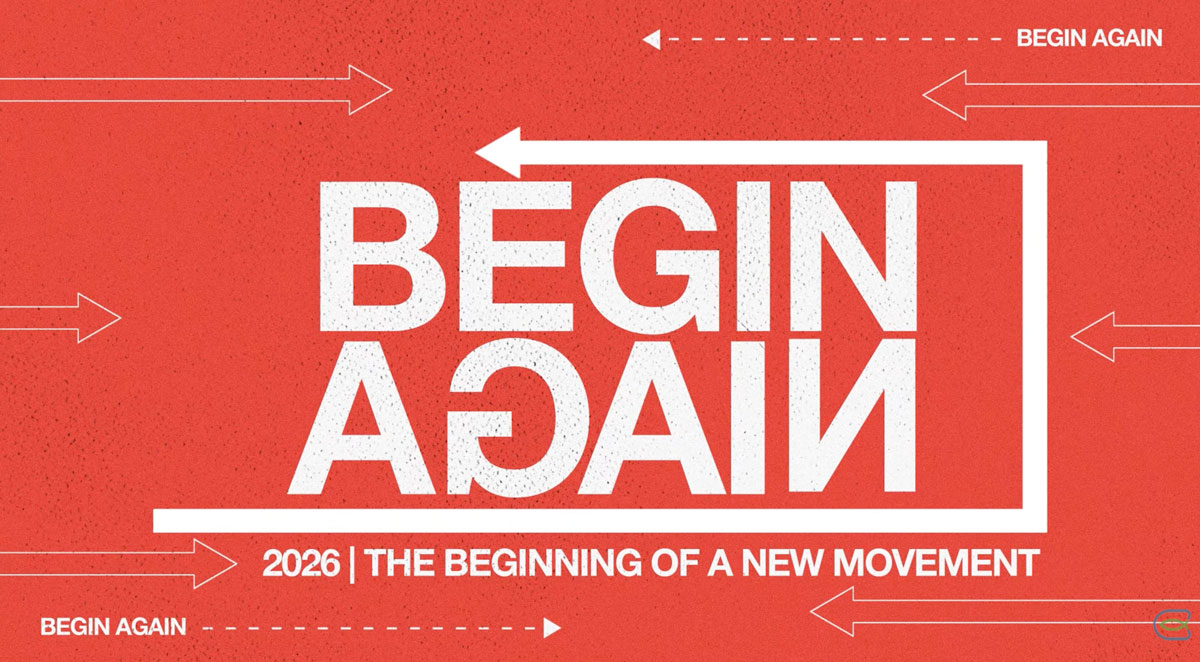
A Short Video Introduction To Christianity & How It Started With Peter Preaching To The Crowd
Ken Hensley – Senior Pastor – Calvary Church, MN – 30 Minutes In – January 11, 2026
__________
Video includes introductory notes about everything going on the first week of 2026 and the author of Acts.
__________
About the Author of Acts: Luke was a physician and careful historian who became one of the most important voices in the New Testament, not because he stood at the center of power, but because he faithfully recorded what God was doing through Christ and His church. As a close companion of the apostle Paul, Luke traveled alongside him during key missionary journeys and witnessed firsthand the spread of the gospel into the Gentile world. Many believe Luke was likely not Jewish but a Gentile, which would make his role even more significant—he stands as a living example of the gospel reaching beyond Israel to the nations. He is traditionally recognized as the author of both the Gospel of Luke and the book of Acts, writing with an orderly, evidence-minded approach grounded in eyewitness testimony. Through Luke, God gave the church not only a detailed account of Jesus’s life and teachings, but also the clearest narrative of how the early Christian movement took root and changed the world.
Purchase a Copy Today
78 Pages In Length – Approximately 2 Hrs 12 Minute Read Plus References
Barnes & Noble
Special Edition Hardcover

Amazon

All MoFB

Bulk Discount For Stores, Foundations & Gifts
Let us know your intent and we will provide all information needed.
Sample - Chapter 4
God’s Word & How It Changes With Time
Index
2. THE DEMOCRATIC PARTY: A SHORT HISTORY
3. FIVE POINTS THAT IDENTIFY YOU AS “OF-THE-WORLD” OR “OF GOD” ACCORDING TO THE DEMOCRATIC PARTY PLATFORM & THE BIBLE
- ECONOMIC REDISTRIBUTION & THE BIBLICAL WORK ETHIC
- GOVERNMENT AS PROVIDER VS. GOD AS PROVIDER
- LGBTQ+ IDENTITY AND THE REDEFINITION OF MARRIAGE
- GENDER-AFFIRMATION POLICIES
- ABORTION AND “REPRODUCTIVE FREEDOM”
4. GOD’S WORD & HOW IT CHANGES WITH TIME
5. THE ART OF DECEPTION
6. ANCHORED IN MORE THAN FAITH
7. CONCLUSION & NOTES TO READERS
74 Pages In Length
The Idea Of Cultural Change & What The Bible Says
__________
Many people today believe that Christianity, like culture, evolves. They argue that since society has become more progressive and accepting, our interpretation of the Bible must change as well. But the Bible’s message hasn’t changed — and it never will. God’s Word is not fluid, bending with social trends or human preference; it is “the same yesterday, today, and forever” (Hebrews 13:8).
Across history, people have treated Christianity in many different ways — as heritage, culture, tradition, or moral framework. Some attend church faithfully, read devotionals, and even lead ministries, yet their understanding of Christianity is shaped more by culture than by Scripture. Jesus Himself warned of this danger: “Not everyone who says to me, ‘Lord, Lord,’ will enter the kingdom of heaven” (Matthew 7:21). The Bible makes clear that calling yourself a Christian and being a Christian are not always the same thing.
True Christianity has always been defined by repentance, faith in Jesus Christ, and obedience to God’s Word. Paul said that salvation does not come through the works of the Law or human effort, but through repentance and faith in Jesus Christ. He taught that if you “confess with your mouth, ‘Jesus is Lord,’ and believe in your heart that God raised Him from the dead, you will be saved” (Romans 10:9–10). Summarizing his message, Paul declared that all people “must turn to God in repentance and have faith in our Lord Jesus” (Acts 20:21). He wrote that “it is by grace you have been saved, through faith—and this not from yourselves, it is the gift of God—not by works, so that no one can boast” (Ephesians 2:8–9), and that “a person is justified by faith apart from the works of the law” (Romans 3:28). In Galatians 2:16, he emphasized again that “a person is not justified by the works of the law but by faith in Jesus Christ.” For Paul, the message was simple and universal: repent and believe in Christ, for “everyone who calls on the name of the Lord will be saved.”
This has often been misunderstood, but remember—repentance is part of the package. Christianity does not conform to denominational lines or political ideologies. Whether one attends a Baptist, Catholic, Methodist, or non-denominational church, the foundation remains the same: salvation through Christ alone and a life transformed by His Spirit. That’s why the question, Can a Democrat be a Christian?, is not about church attendance or personal sincerity—it’s about whether the Democratic Party platform and the biblical gospel can coexist. When the two are laid side by side, the conflict becomes undeniable.
How People Redefine Christianity
Many in today’s culture argue that Christianity is not monolithic — that its meaning shifts over time and across interpretations. Progressive movements within churches claim that “love,” “justice,” and “inclusion” allow for moral flexibility. They read ancient commands about sexuality, gender, and marriage as cultural relics rather than moral absolutes. Mainline denominations such as the Episcopal Church, the Evangelical Lutheran Church in America (ELCA), and the United Church of Christ have embraced this approach, aligning closely with Democratic Party social values — affirming LGBTQ+ relationships, ordaining openly practicing clergy, and celebrating abortion rights as expressions of compassion and equality.
To them, Jesus’ command to “love your neighbor” (Matthew 22:39) means accepting whatever someone chooses for themselves. But they forget the first commandment in that same passage: “Love the Lord your God with all your heart, soul, and mind” (Matthew 22:37). Love for neighbor must be defined by love for God — and that love means obedience to His Word.
The Bible’s Clarity About Sin
Scripture speaks in clear terms about sin. It does not shift with the latest fashions or what’s acceptable. Passages like Leviticus 18:22 and Romans 1:26–27 call same-sex acts “contrary to nature.” Paul wrote these words while living under Roman rule — a society far more permissive, immoral, and violent than our own — yet he never softened his message. The same was true of the early church. The apostles preached one gospel, unchanged by culture: repent, believe in Christ, and be saved.
This consistency is one of Christianity’s greatest proofs. Despite crossing languages, governments, and centuries, its message remained the same. The apostles preached to Jewish legalists in Jerusalem, philosophers in Athens, idolaters in Ephesus, and the morally corrupt in Corinth — yet they never adjusted the gospel to fit their audience. The call to repentance was universal.
Examples from the Apostles
- Athens (Acts 17:22–31) — Paul spoke to intellectuals and philosophers, acknowledging their religiosity but boldly declaring, “Now God commands all people everywhere to repent.” Even among the “tolerant” elites of his time, he did not water down the truth.
- Corinth (1 Corinthians 6:9–11) — In a city known for sexual immorality and wealth, Paul warned, “Do not be deceived… the sexually immoral, idolaters, adulterers… will not inherit the kingdom of God,” then reminded them, “And such were some of you.” Transformation — not affirmation — was the mark of grace.
- Rome (Romans 1:18–32) — To the most powerful empire on earth, Paul declared that when societies reject God, they descend into every kind of sin — idolatry, greed, sexual perversion, and arrogance. His words sound as modern as today’s headlines.
- Ephesus (Acts 19:18–20) — Those who practiced witchcraft burned their valuable books publicly. Conversion meant renouncing profitable sins — proving that the gospel demands change.
- Jerusalem (Acts 2:36–39) — To the devout and religious, Peter preached repentance with the same force as to the pagans: “Repent and be baptized… for the forgiveness of your sins.”
- Philippi (Acts 16:16–19) — When Paul freed a slave girl from exploitation, it cost her owners profit — and landed him in prison. Even against economic powers, the message did not change.
Across every culture — whether philosophical, sexualized, legalistic, or corrupt — the apostles’ message was unyielding: sin separates, Christ redeems, and repentance restores.
The Unchanging Core of Christianity
Throughout Scripture, God’s moral law stands firm even as cultures shift. Isaiah 40:8 says, “The grass withers, the flower fades, but the word of our God will stand forever.” Every attempt to reshape Christianity into a more “modern” or “inclusive” faith only distances people from truth. God’s standards do not evolve; they expose human sin so that grace can heal it.
Christianity offers freedom — but not the freedom to redefine sin. It offers love — but not love that ignores repentance. It offers inclusion — but only through the transforming power of Jesus Christ.
Proof Through the Apostles’ Deaths
If cultural convenience could bend truth, the apostles would have abandoned it long before they died for it. Yet not one recanted. Peter was crucified upside down. Andrew was nailed to an X-shaped cross. James was executed by the sword. Thomas was speared. Paul was beheaded. Others were stoned, flayed, or exiled — all proclaiming the same message to their final breath: Jesus Christ is Lord, and salvation comes only through Him.
Their courage across continents and centuries demonstrates that the truth of Christianity is not cultural — it is eternal.
Culture changes, but truth does not. Christianity does not evolve to meet the desires of the day; it confronts them. From Jerusalem to Rome, from the first century to today, the call has never changed: repent, believe, and follow Christ. f your version of Christianity bends to fit culture, it may carry the name, but it has lost the cross.
NOTE: Footnotes included in book. See book for references.

Matter Of Fact Books
Publishing What Matters Most
What's Behind Matter Of Fact Books
Matter of Fact Books is not the work of one person. It is inspired by God and shaped through Scripture, conviction, and years of deep conversation—often around a table with an amazing group of friends, a glass of scotch, and a refusal to accept shallow answers. We’re not here to shout opinions. We’re here to present facts, side-by-side truth, and clear reasoning—so readers can examine what they believe, why they believe it, and whether it aligns with what they claim to profess.
Matter Of Fact Books
Click image to find out more.

Matter Of Fact Books
Our books are priced to sell and change lives.