
Has God Become Too Familiar?
As a matter of fact...
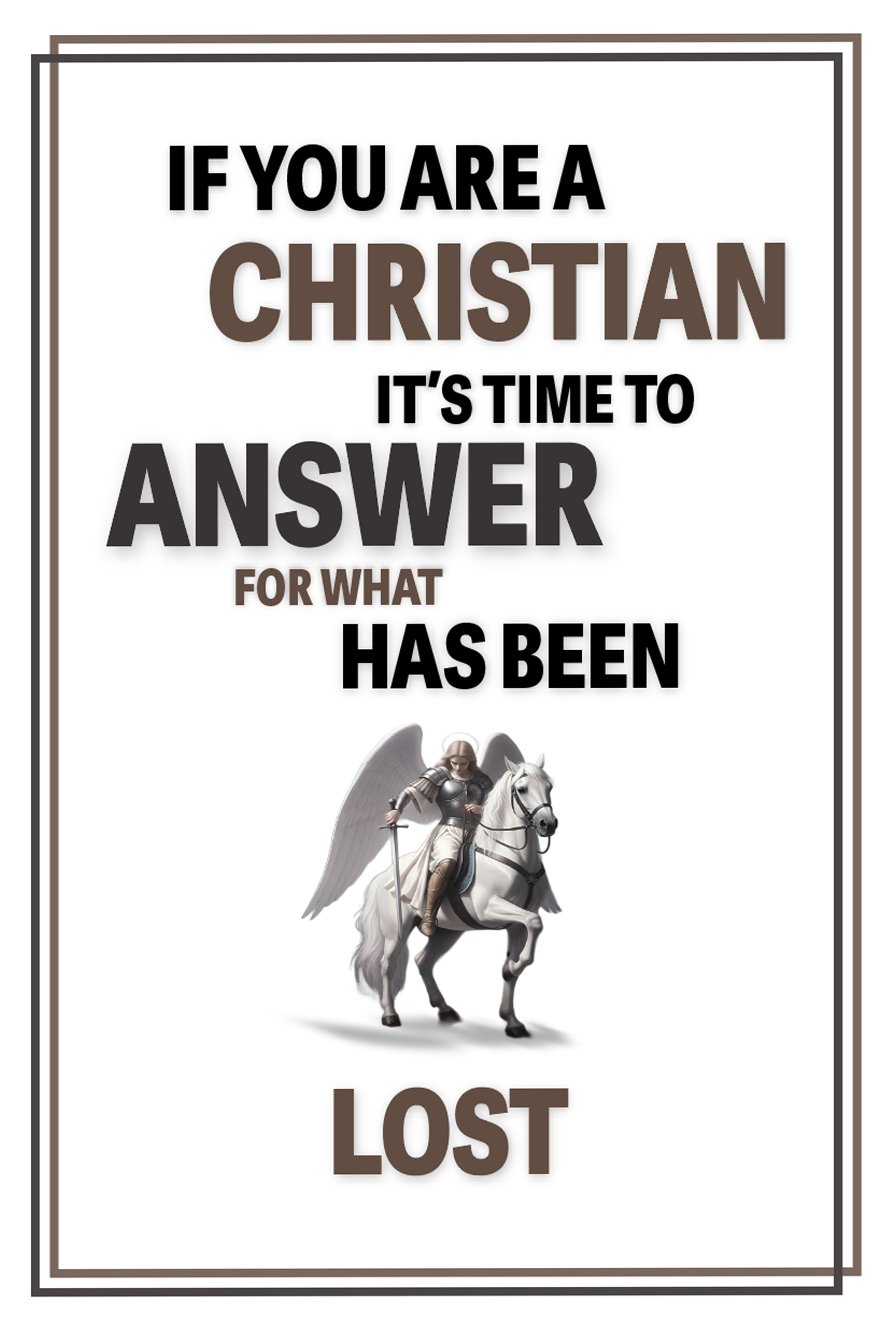
Why This Book Was Written
When Isaiah encountered God, he did not feel affirmed. He collapsed.
“If You Are a Christian, It’s Time To Answer For What Has Been Lost” begins there—not to unsettle for its own sake, but to recover what modern Christianity has quietly lost: the fear of God. Moving carefully through Scripture and the lived formation of the Church, it examines how different Christian traditions have preserved parts of the truth while softening others, and how culture has increasingly been allowed to correct God rather than submit to Him.
This is not a call to abandon faith, nor a defense of any single tradition. It is an invitation to honesty. What kind of God are we actually approaching? A God who can be entered casually? A God who reassures before He reveals? Or the God Scripture presents—holy enough to undo us and near enough to cleanse?
If God is Lord, then faith cannot remain comfortable. It must endure Him as He is. This book does not promise clarity without cost or grace without obedience. It asks a single, unavoidable question: Is the faith we have formed strong enough to stand before a holy God—or has it been reshaped to avoid Him?
Index
2. The God Who Draws Near Without Shrinking- (12)
3. Love Without Fear, Fear Without Love – (16)
4. When Worship Became Familiar – (20)
5. Catholicism: The God Above Us – (24)
6. Evangelicalism: The God Beside Us – (28)
7. Orthodoxy: The God Who Remains Unchanged – (32)
8. When Culture Was Allowed to Correct God – (36)
9. The Cost of Recovering the Fear of God – (40)
10. The God Who Will Not Be Reimagined – (44)
11. A Faith Worth Keeping – (48)
54 Pages In Length
Purchase a Copy Today
54 Pages In Length – Approximately 1 Hrs 42 Minute Read
Barnes & Noble
Amazon

All MoFB
Bulk Discount For Stores, Government, & Military
Let us know your intent and we will provide all information needed.
Sample - Chapter 2
The God Who Cannot Be Approached Casually
Index
2. The God Who Draws Near Without Shrinking- (12)
3. Love Without Fear, Fear Without Love – (16)
4. When Worship Became Familiar – (20)
5. Catholicism: The God Above Us – (24)
6. Evangelicalism: The God Beside Us – (28)
7. Orthodoxy: The God Who Remains Unchanged – (32)
8. When Culture Was Allowed to Correct God – (36)
9. The Cost of Recovering the Fear of God – (40)
10. The God Who Will Not Be Reimagined – (44)
11. A Faith Worth Keeping – (48)
54 Pages In Length
_______
Most Christians today believe they understand what it means to approach God. Prayer is spoken freely and often casually. Worship is framed as invitation rather than encounter, reassurance rather than confrontation. God is described as near, personal, and accessible—present to comfort, guide, and affirm. This posture is rarely questioned because it feels mature and relational. Familiarity is assumed to be evidence of spiritual growth. Yet Scripture offers a far less comfortable starting point. When God reveals Himself clearly, the response is not reassurance but collapse—not because God is cruel or distant, but because holiness is not experienced as warmth by those unprepared to stand before it.
It is for this reason that the book begins with Isaiah, not because he was unusually sinful or spiritually immature, but because he was faithful. Isaiah did not enter the temple looking for an experience. He was not searching for clarity, affirmation, or emotional reassurance. He was not preparing himself for a dramatic encounter or a personal calling. He went to the temple because that is what faithful men do. The temple was the place of prayer, ritual, and continuity—the space where God was honored according to long-established forms. Isaiah entered expecting nothing more than faithfulness. And then God appeared.
The text does not present this appearance as symbolic, emotional, or internal. There is no suggestion that Isaiah merely felt God’s presence or imagined His nearness. Scripture does not ease the reader into the moment or offer psychological explanation. God appears as objective reality, without warning or preparation, interrupting the ordinary flow of worship. Isaiah is not gradually made aware of God; he is suddenly exposed to Him. The narrative allows no space for adjustment. One moment Isaiah is in the temple; the next, he is standing before the King.
Isaiah’s response is not joy. It is not peace. It is not the kind of worship modern Christianity often associates with encountering God—expressive, affirming, or emotionally satisfying. Isaiah collapses. His words are not praise but pronouncement: “Woe is me.” This is not the language of regret or self-reflection. It is the language of judgment. Isaiah does not ask for forgiveness. He assumes he is finished.
“Woe is me! For I am undone; because I am a man of unclean lips, and I dwell in the midst of a people of unclean lips; for my eyes have seen the King, the LORD of hosts.” (Isaiah 6:5)
This moment offers one of Scripture’s most honest theological insights: the presence of God is unbearable to the unprepared. Isaiah does not rejoice at being seen by God; he fears that he has seen too much. The problem is not that Isaiah feels small. The problem is that Isaiah realizes he is small—and exposed. In the presence of God, illusion cannot survive. Isaiah does not suddenly become sinful; he suddenly becomes aware. God’s holiness does not create impurity in him. It reveals what was already there.
Isaiah does not attempt to catalogue his failures or list moral transgressions. His confession is more fundamental than that. He identifies himself as unclean in essence, not merely in behavior. Even his speech—his lips, the instrument of prophecy—is unfit to endure God’s presence. The closer God draws, the more impossible self-justification becomes. This is not an emotional reaction but a theological one. Holiness clarifies reality, and clarity is devastating to the unguarded self.
Scripture reinforces this reality by refusing to describe God directly. Instead, it describes what surrounds Him and how creation responds. God is seated on a throne, high and lifted up, and the hem of His robe fills the temple. Not His body, but His garment overwhelms the sacred space. Even what belongs to God without being God exceeds the capacity of the temple designed to contain holiness. Above Him stand seraphim—beings created not for redemption but for proximity—and even they do not gaze upon Him. They cover their faces and their feet, not as ritual humility but as necessary protection. Even sinless beings shield themselves from direct exposure to divine holiness.
Their cry—“Holy, holy, holy”—is not poetic exaggeration. It is linguistic insufficiency. One declaration is not enough. Language strains under the weight of what it is attempting to describe. The foundations shake. Smoke fills the space. Creation itself reacts as it always does when God draws near—not with calm or reassurance, but with instability. God’s presence is not soothing. It is destabilizing.
Only after Isaiah is undone does grace move toward him. And even then, grace does not arrive gently. A burning coal from the altar is pressed to Isaiah’s lips—the very place he identified as unclean. Forgiveness is not abstract or sentimental. It burns because it must. God does not reduce His holiness to accommodate Isaiah; Isaiah is transformed so that he may remain in God’s presence without being destroyed. Grace does not precede holiness. Holiness reveals the need for grace.
Only after this does Isaiah hear God speak. Not with reassurance, and not even directly to him, but into the space itself: “Whom shall I send, and who will go for us?” Isaiah responds not because he feels confident or prepared, but because he has survived. Calling follows collapse. Commission follows cleansing. This order is not incidental. It is the pattern Scripture refuses to abandon.
Isaiah 6 confronts the modern reader with a question that cannot be avoided: what kind of God do we believe we are approaching? A God who can be entered casually, who reassures before He reveals, who affirms without undoing? Or the God Isaiah encountered—whose holiness exposes, whose presence overwhelms, and whose grace transforms only after it wounds? This book begins here because every distortion of Christianity begins by forgetting this scene or explaining it away. If God can be approached casually, then nothing else in Scripture matters very much. But if Isaiah was right, then everything does.
What Isaiah encounters in the temple is not a unique spiritual temperament or an ancient psychological disposition. It is not the response of a fragile conscience or a culturally primitive fear of the divine. It is the only rational response to unmediated holiness. Scripture does not present Isaiah as unusually sensitive; it presents him as accurate. When God is revealed as He is, fear is not a failure of faith but evidence of clarity.
This is precisely what makes Isaiah 6 so disruptive to modern Christian assumptions. Much of contemporary faith has learned to speak of God fluently while remaining untouched by Him. We have grown comfortable describing intimacy without trembling, nearness without disruption, love without fear. God is spoken of constantly, yet rarely as someone whose presence would undo us. The result is not irreverence in intention, but familiarity in posture—a confidence before God that Scripture never teaches and the saints never modeled.
Isaiah does not approach God casually because God does not permit it. The prophet is not instructed to relax, reassured of his worth, or told that his fear is unnecessary. Instead, Scripture presents fear as the appropriate first response and grace as God’s answer to it. The problem, then, is not that fear exists, but that it has largely disappeared from our understanding of faith. Where fear is absent, holiness is reinterpreted. Where holiness is reinterpreted, grace becomes cheap. And where grace becomes cheap, obedience becomes optional.
This chapter begins here because every distortion of Christianity begins with a diminished view of God. When God is assumed to be safe, worship becomes casual. When God is assumed to be familiar, reverence fades. When God is assumed to affirm before He reveals, repentance loses urgency. Isaiah 6 stands in direct contradiction to these assumptions, insisting that God is not encountered on human terms and that nearness does not negate holiness.
Yet Isaiah 6 does not end with destruction. It ends with commission. The God who undoes Isaiah is the same God who sends him. Fear does not drive Isaiah away; it clears the ground for obedience. Grace does not eliminate holiness; it makes obedience possible without annihilation. This tension—terrifying holiness and transforming nearness—will not be resolved by choosing one over the other. Scripture refuses that choice.
The question Isaiah leaves us with is not whether God is loving, but whether we are willing to approach Him as He is rather than as we prefer Him to be. If God can be approached casually, then nothing else in Scripture matters very much. But if Isaiah was right—if God remains holy enough to undo and near enough to cleanse—then everything that follows must be reconsidered in that light.

Matter Of Fact Books
Publishing What Matters Most
What's Behind Matter Of Fact Books
Matter of Fact Books is not the work of one person. It is inspired by God and shaped through Scripture, conviction, and years of deep conversation—often around a table with an amazing group of friends, a glass of scotch, and a refusal to accept shallow answers. We’re not here to shout opinions. We’re here to present facts, side-by-side truth, and clear reasoning—so readers can examine what they believe, why they believe it, and whether it aligns with what they claim to profess.
Matter Of Fact Books
Click image to find out more.


Matter Of Fact Books
Our books are priced to sell and change lives.